
Lead Institution: University of Bath
Collaborating with: freelance
This is a sub-project of Strengthening, extending and embedding employer engagement
Progress was reported throughout the project. For the complete final report of the project see here.
The project is within its initial stages having started in October 2011 with the following activities having taken place to date:
The University of Bath has a very experienced placement staff with a developed understanding of placement learning.
While awareness of several aspects of placement learning is implicit in supporting documents, both internally and externally, there would be benefit in having a comprehensive definition of the circumstances under which students are most likely to learn on placement. Confusion between ‘evaluation’ and ‘assessment’ exists, although it is the norm in HE to ‘evaluate’ learning situations and to ‘assess’ students’ performance.
Placement staff are confident that nearly all of their placements are of high quality. They know of very few placements that are poor and such cases as they are aware of are dealt with effectively. Timely feedback and analysis of students' real experiences, both positive and negative, is key to ensuring real quality placement learning. Past research has shown that open dialogue is considerably more revealing than surveys of students’ opinions.[1] Inconsistencies in the collection and use of student feedback will be addressed in this project.
An important element of placement evaluation is the placement visit. There can be inconsistency of practice whether or not students are visited on placement and by whom (academics or placement professionals) and the uses made of placement reports.
It is vital that learning outcomes are clearly defined in placement unit descriptions; placement staff, employers and students need to be aware of them and understand how placements can fulfil the set learning outcomes - how this translates in practice within the placement. Academics will need to be involved in defining and assessing students against learning outcomes, related to overall programme aims.
[1] Turner, P. (2005). Undergraduate learning at programme level: an analysis of students’ perspectives. PhD thesis, University of Bath. http://opus.bath.ac.uk/432/
Achievements to date:
The University’s placement staff have considerable experience in the effective management of student placements. Current evaluation of placement situations relies on staff’s prior knowledge of existing host institutions and on them asking relevant questions of new/ potential placement hosts. Some information is also gathered from placement students.
The draft Guidelines recommend increased collection of qualitative feedback from students during placements and that analysis of such data should focus on students’ perceptions of the nature of their placement work, their role, the level of support they receive and their placement learning.
Alongside these Guidelines, and complementary to them, frameworks for analysis are being produced and workshops will be held. Together, these are intended to achieve the overall aims of this project on the evaluation of placements, i.e. to help staff involved in placements towards greater understanding of placement learning and learning outcomes and in the use of qualitative data in the analytical evaluation of placements.

Dr Poppy Turner
freelance

 Student-led Employability Audit Toolkit
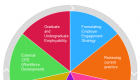 Employer engagement continuum model
 Strengthening, extending and embedding employer engagement
 Design a Fireworks Show! - using Context and Problem Based Learning
 Developing & Enhancing STEM Communicator Models
 Quantifying the benefits to collaborating companies of working with groups of students on UG projects
 Progressing from labour market intelligence to HE level provision that is well supported by employers
 Developing a new CRM system for managing relationships with SMEs
 Get STEM working: innovation with employer and student engagement
 Online Numeracy Resource & Nursing
 Peer Assisted Learning & STEM
 Community of Practice for Outreach and WP Practitioners
 Better understanding drivers for employer engagement through an innovative approach to relationship management
 South West HE STEM Workforce Development & Employability Conference
 Adult returner journeys through HE to STEM careers
 Promoting employer engagement opportunities to employers
 The Hydrographic Academy: Meeting the needs of the workforce and industry through innovative, flexible, online distance learning
 The challenges and opportunities of incorporating community-based learning into STEM subjects
 Transition & Induction Experiences of WP Students
 Access Grid Nodes for remote training provision for work-based learners
 The employer perspective on universities' promotion of opportunities to engage with the STEM UG curriculum
 Developing Writing in STEM Disciplines
 Enhancing STEM Academics' Public Engagement Skills
 Development and implementation of a programme of employability skills for Science undergraduates
 The integration of understanding of offerings for engagement between universities and industry


© University of Bath 2011-12
HE STEM Programme, University of Bath, Bath, BA2 7AY, UK
Updated by HE STEM web team
Website by Float
