
Lead Institution: Kingswood School
This CPD case study focuses on Dr Paul Shepherd of the Civil Engineering department at the University of Bath. A collaborative practice model of CPD provides the structure for the case study. The model saw the project lead (a secondary school maths teacher) working alongside Paul to restructure course content on Matrices and Vectors delivered to first year civil engineers, to ease the transition for students from school mathematics to university.
The model necessitated 5 stages, as below:
The project lead worked with Paul on a sequence of lectures entitled 'Matrices' that had been delivered across the 2010 - 2011 academic year (download the original course notes below). Paul recognised that his Matrices course material would benefit from taking a closer look at the sequential nature of the A level Mathematics and Further Mathematics course content, highlighting where each topic area within Matrices sits (see document below). This information could subsequently be used to structure his course and to inform lecture planning and delivery.
Original Matrices Course Notes: 2010 - 2011
Matrices & Vectors in Maths & Further Maths Courses
Using the information above and from tips given by the project lead, Paul used existing Edexcel text books, C4, FP1, FP2, and FP3 to help gain an appreciation of the progression of the Vectors and Matrices topics within these A level modules. Then, Paul and the project lead chatted about his ideas regarding the delivery of the content for this lecture sequence.
Subsequently Paul decided on the best approach to present the material to facilitate learning based on student experiences at A level, being mindful of the diverse nature of the A level Maths, Further Maths and International Baccalaureate mathematical qualifications possessed by his cohort of engineering students. Paul then wrote his course notes, and tutorial questions based on this information, entitling the course 'Vectors and Matrices.' The revised course notes for the 2011 - 2012 academic year can be downloaded below:
Revised Vectors & Matrices Course Notes: 2011 - 2012
Paul identified that he would like his new course material to be observed by the project lead for two themes: how it supported improved transition to university mathematics and how it enhanced student engagement.
It has been long recognised that successful engagement strategies within universities rely on transition. In Student Engagement Literature Review (2010), Trowler states:
… becoming a student and developing an identity as a student is a prerequisite for successful engagement and developing a sense of belonging to the university community.
Therefore, transition is inextricably linked to students’ engagement experiences within academic courses and equally, students who engage with course content written in a familiar format will hopefully make a more successful transition to study within universities. Student engagement with course content is also a very important indicator of future academic success and hence retention, as Trowler’s conclusion states:
A substantial, robust body of evidence exists to support assertions that individual student engagement in educationally purposive activities leads to more favourable educational outcomes.
There are many excellent engagement strategies which are now commonplace in the secondary mathematics classroom, and an understanding of how these could be transferred successfully into HE would enable students to engage with the material and frame it in a more familiar setting, thereby easing potential issues with the course.
The video observation of Paul's new lecture material allowed such engagement strategies to be observed and from this, a series of 13 recommendations have been produced suggesting to enhance student engagement in lectures.
To evaluate the success or otherwise of the new course materials, students were asked to answer the following four questions:
1. Given your previous experience of mathematics at A level, did you enjoy the structure of the course content today?
2. How did the structure of the learning either help or hinder your learning?
3. How could the structure of the lecture be improved?
4. Is there anything else you would like to share about the lecture and how it worked for you?
43 out of 93 students answered the four questions; analysis of their answers is found on pp 2 - 4 of the below document:
Student Feedback - Analysis of Responses
As a final stage of the collaborative practice model of CPD, Paul Shepherd reflected on the process - what he felt he had gained from it and the feedback from students. The below document captures his learning in full:
A Lecturer's Reflections on the Collaborative Practice Model of CPD

Garrod Musto
Project lead, Kingswood School

 Online Numeracy Resource & Nursing
 Get STEM working: innovation with employer and student engagement
 Community of Practice for Outreach and WP Practitioners
 Developing Writing in STEM Disciplines
 Student-led Employability Audit Toolkit
 Progressing from labour market intelligence to HE level provision that is well supported by employers
 The challenges and opportunities of incorporating community-based learning into STEM subjects
 Learning chemistry through placements: building on good practice and identifying new opportunities
 Strengthening, extending and embedding employer engagement
 Employability Skills of STEM Student Ambassadors
 Design a Fireworks Show! - using Context and Problem Based Learning
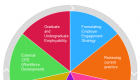 Employer engagement continuum model
 Adult returner journeys through HE to STEM careers
 Better understanding drivers for employer engagement through an innovative approach to relationship management
 Becoming a STEM Enthusiast - Outreach & CPD Video Resources
 Transition & Induction Experiences of WP Students
 Technology-enabled employer engagement in analytical chemistry
 Developing & Enhancing STEM Communicator Models
 Enhancing Workplace Statistical Literacy
 Enhancing STEM Academics' Public Engagement Skills
 Peer Assisted Learning & STEM
 Mechanisms for sustainable employer engagement
 The Hydrographic Academy: Meeting the needs of the workforce and industry through innovative, flexible, online distance learning
 Projects without borders: Understanding how employer-led UG projects differ across the STEM disciplines
 Developing a new CRM system for managing relationships with SMEs


© University of Bath 2011-12
HE STEM Programme, University of Bath, Bath, BA2 7AY, UK
Updated by HE STEM web team
Website by Float
